
A concert worth the journey
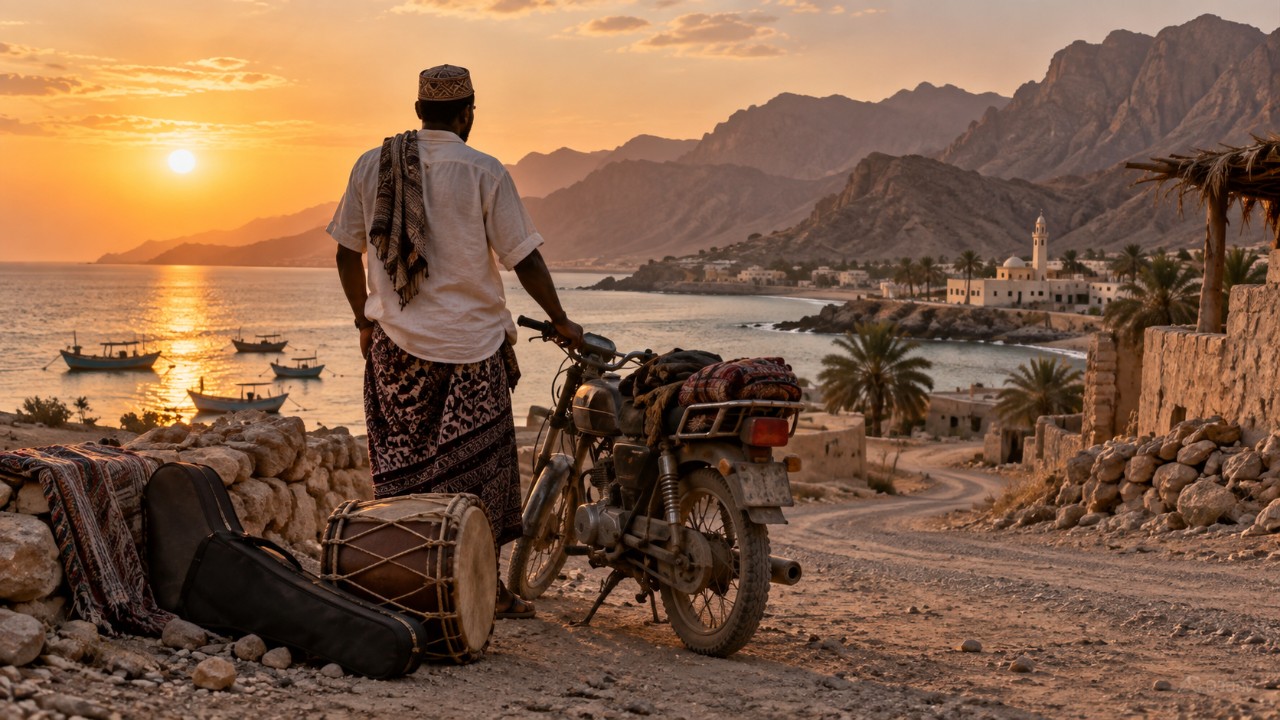
Hamid Said has a plan: gather musicians and organise a concert in southern Iran. To find them, he travels by motorbike across Hormozgan province. Filmmaker Kamran Heidari follows the trip in Dingomaro: Iran’s Black South, a documentary built around Said’s determination to make the performance happen. The journey is demanding, and Asia Society’s description of the film notes that the landscape and other obstacles stand in his way.
Said is known as Dingomaro. According to Spectacle Theater’s film programme, the name refers to a wind said to sweep toward Iran from the African coast. It is Said’s nickname and the film’s title, rather than the name of an ethnic group.
Music opens the story
The documentary gives viewers a goal to follow: will Said manage to bring the musicians together? Along the way, his search introduces people whose music is part of cultural life in the region. Documentary distributor Autentic describes Said as a musician whose song “Bad Shans” gained an audience online before he set out to organise the concert.
Music is a fitting way into this story. It lets the artists appear as performers with their own ambitions, relationships and creative choices. The film’s wider subject—Afro-Iranian life—emerges through Said’s journey.
The history behind Iran’s African heritage
The African presence in Iran has deep roots, including a painful history of slavery. Historian Behnaz Mirzai documents how trade in enslaved people across the Persian Gulf helped establish African communities in Iran. Descendants of those communities are Iranian, while their histories also connect them to Africa and the Indian Ocean.
That background helps explain why Dingomaro matters, but it does not define Said’s whole story. He is a musician trying to make a concert happen. The film allows viewers to meet him in the present, pursuing a dream alongside other artists.
Why Dingomaro matters
Many international audiences have a narrow picture of Iranian culture. Heidari’s documentary takes them to Hormozgan and lets a local musician guide the way. Its central question is simple—can Said realise his concert?—but following that effort brings viewers closer to a part of Iran they may never have encountered.
For Kreyol Music readers, Dingomaro offers another place to explore the music of the African diaspora. The film belongs to its own Iranian setting. Its rhythms and its musician’s journey invite us to listen across the Indian Ocean.